

Every day brings weather. Decades create climate.
Most people use the words weather and climate interchangeably. They are closely related—but they are not the same thing. Understanding this difference is one of the most important first steps in understanding climate change, why it affects our communities, and what we can do to build a more sustainable future.
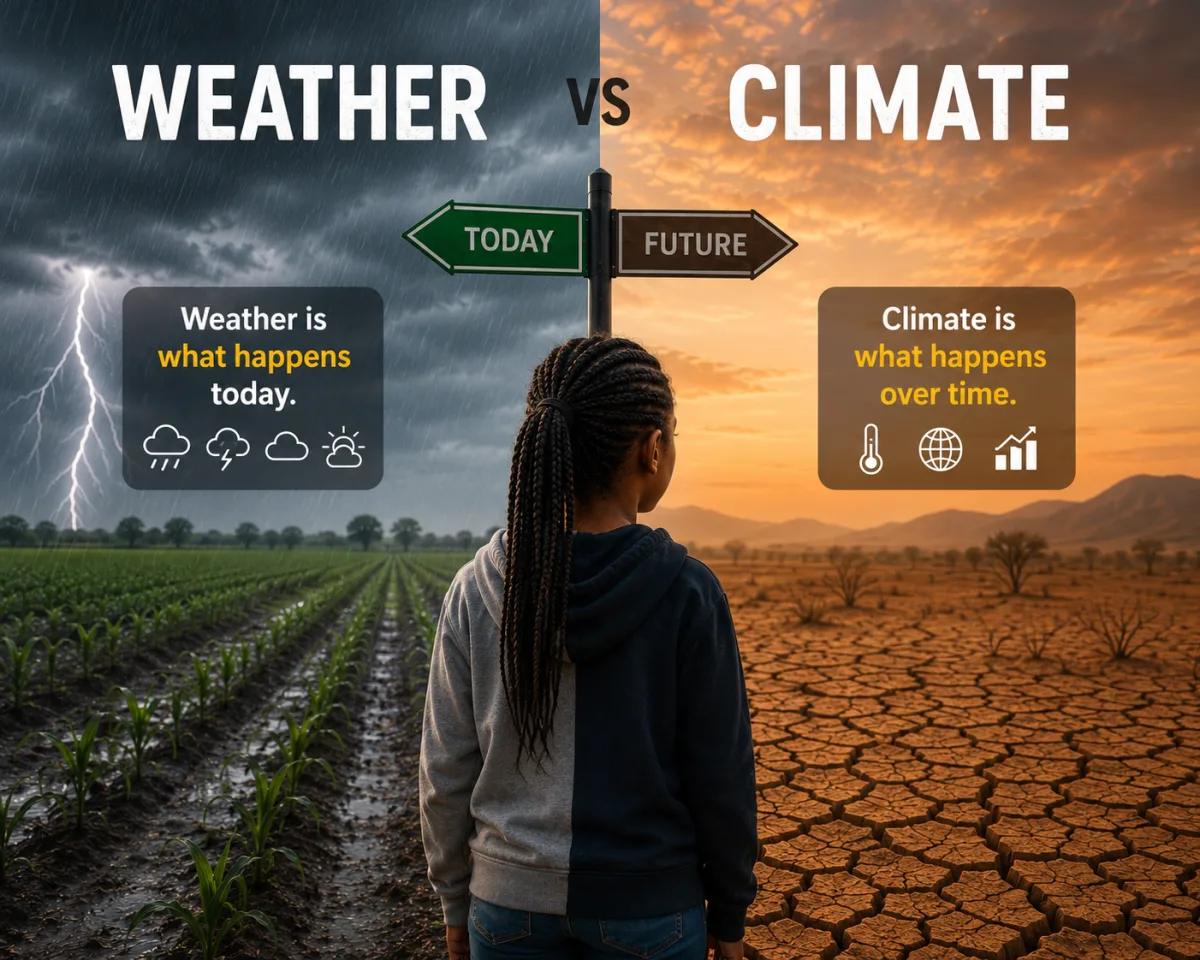
[IMAGE : Weather Vs Climate]
At the Climate Energy and Livelihoods Initiative (CELI), we believe climate education should be practical, relatable, and empowering. During a recent interactive learning session at Junior Secondary School, Kpaduma (a government school located in Abuja, Federal Capital Territory, Nigeria), participants aged between 13 -15 years explored the science behind weather, climate, and the greenhouse effect while discovering how everyday actions influence the future of our planet.
Why we started in a classroom
Nigeria’s energy transition will be carried out by people who are in secondary school today. They will be its technicians, its farmers, its entrepreneurs, and its policymakers. Most of them are currently getting little or no structured education about energy or climate at all.
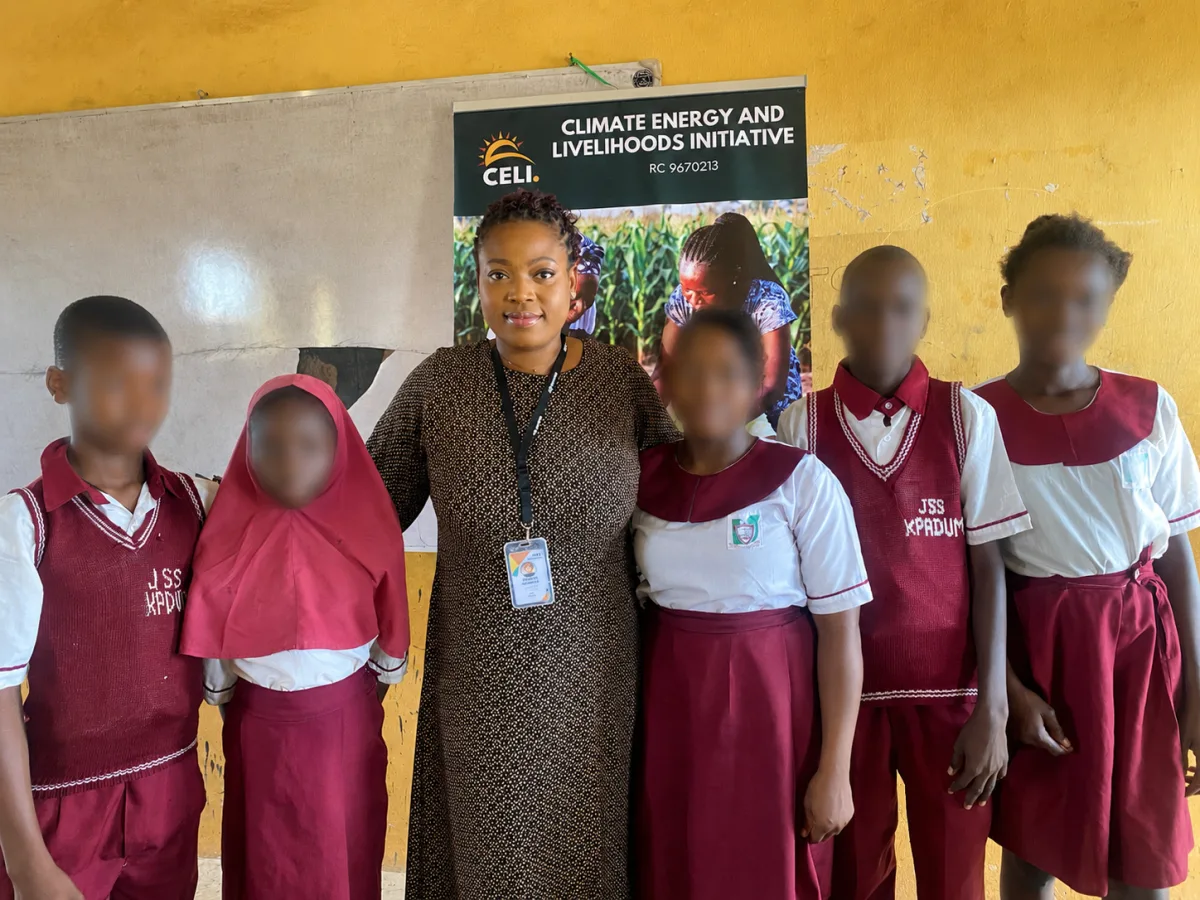
[IMAGE : Participants at Classroom discussion]
That gap is the reason our schools programme exists, and it is why we chose a classroom for our first activity rather than a conference room. Climate change is usually presented to Nigerian teenagers, when it is presented at all, as something distant and abstract: melting ice, foreign summits, other people’s weather. It is neither distant nor abstract. It is their harvests, their water, their air, and their working lives.
What we covered
We kept the hour deliberately practical. The aim was not to hand over a vocabulary list but to leave the room with two things intact: an accurate picture of what is happening to the atmosphere, and the understanding that individual action is neither pointless nor complicated.
Sessions like this are designed to be participatory rather than a lecture in the strict sense, and adapted to the age group in front of us. Thirteen to fifteen is a good age to meet this subject. Old enough to follow the science, young enough that career directions are still wide open.
What Is Weather?
Weather refers to the day-to-day condition of the atmosphere. It includes things like sunshine, rainfall, wind, temperature, humidity, and storms.
What Is Climate?
Climate is the long-term pattern of weather over many years or even decades. Weather is today's story. Climate is the entire book.
Why Climate Matters to Nigeria
Across Nigeria, many rural communities rely on rain-fed agriculture. When rainfall becomes unpredictable, crops fail, harvests decline, farmers lose income, and food prices rise.
Understanding the Greenhouse Effect
The greenhouse effect is essential for life on Earth. Without it, our planet would be too cold for survival. The problem today is that human activities—such as burning fossil fuels and deforestation—have increased the concentration of greenhouse gases, trapping too much heat.
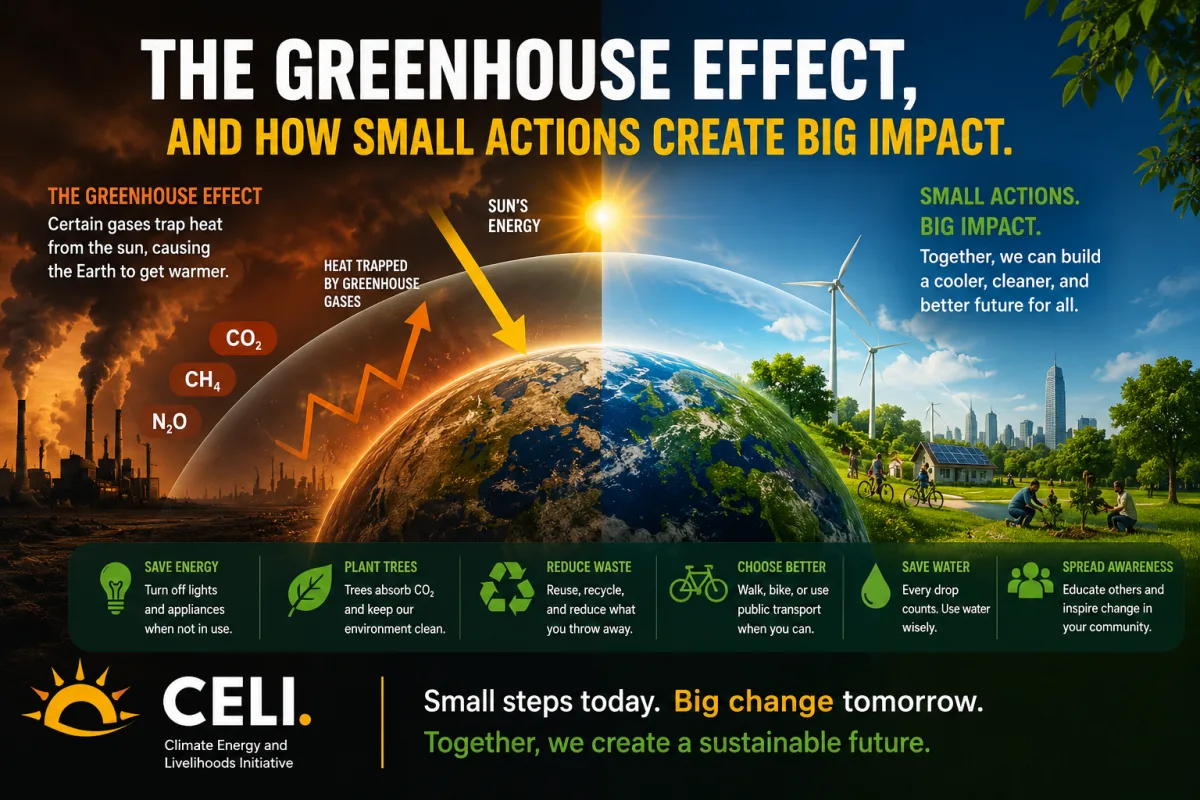
[IMAGE : Greenhouse effect, and how small actions create big impact]
Small Actions Create Big Impact
One person cannot stop climate change alone. But millions of people making better choices—like turning off lights when leaving a room and planting trees—can. Small actions become community habits, and community habits become national change
.
What the students told us
The most useful feedback we received came from a student who told us afterwards that they had enjoyed the lecture and learnt a lot of new things, because the concepts had been explained clearly.
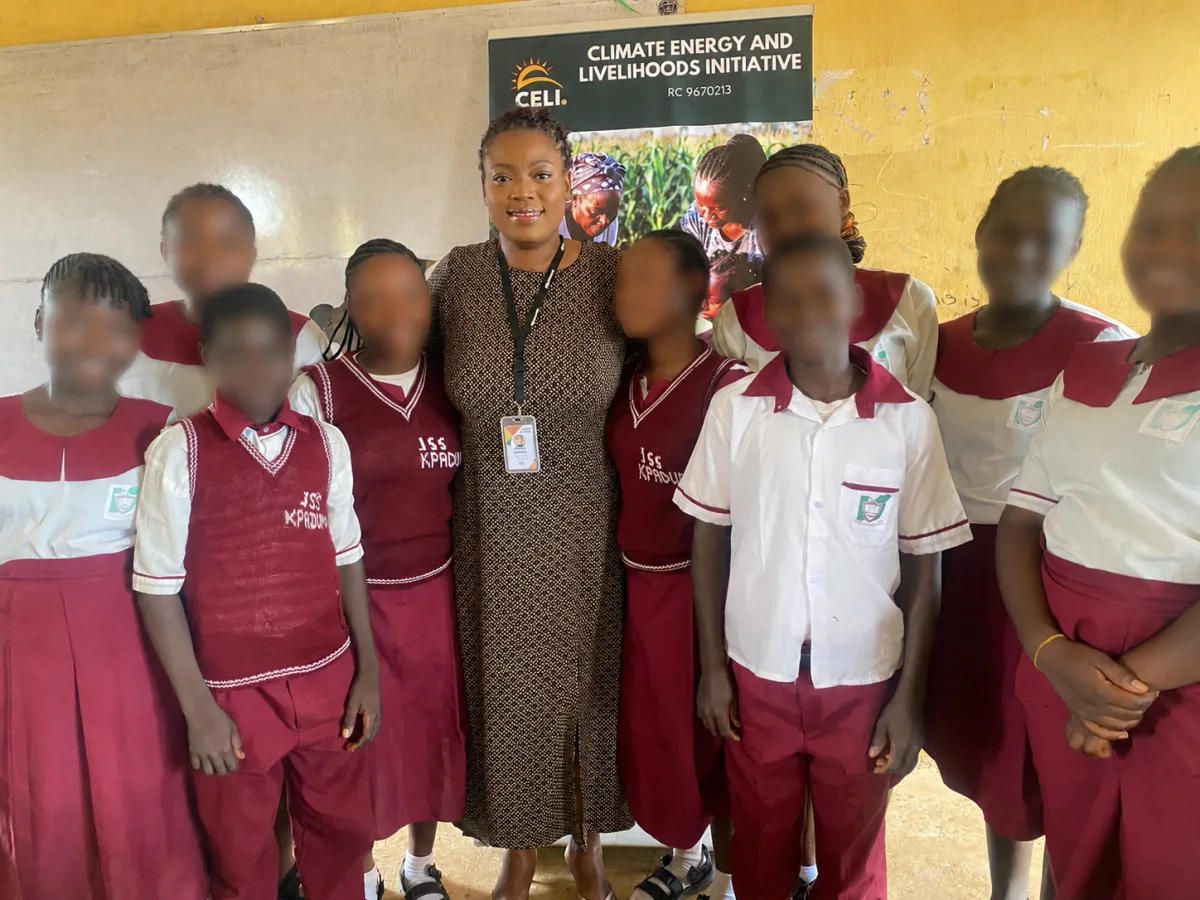
[IMAGE : Participants at Classroom discussion]
We are recording that comment here because it is precisely the thing we were testing. The barrier was never that young Nigerians are indifferent to climate and energy. The barrier is that the subject is rarely offered to them in a form built for them. Explain it clearly, in their context, and the interest is already there waiting.
What happens next
At the Climate Energy and Livelihoods Initiative (CELI), we are committed to empowering individuals and communities with the knowledge and practical solutions needed to create resilient livelihoods while protecting our environment.
Two invitations came out of the visit. The school asked the CELI team back for its graduation the following week, and asked us to return to present to more classes when school resumes in September.
We take both as the most honest measure of whether an hour was worth anyone’s time: whether they want you back. We are now building a pipeline of schools for the coming terms and refining the session materials with each delivery, and we will keep reporting what we do, including what we would change.
You can read more about the programme, including how we measure it, on the Climate & Energy Education in Schools project page.
Work with us
If you lead a school that would like to host a session, if you teach and want to help us shape the materials, or if you want to fund the expansion of this programme to more schools and states, write to us at info@celi.org.ng.